
Personalized approaches help treat depression
Translating the findings from clinical trials into tools that clinicians can use to help make decisions about treating depression — that’s the goal of research by Dr. Helena Kim, a postdoctoral researcher with the Centre for Addiction and Mental Health and the University of Toronto.
There’s a gap between the growing discoveries from mental health research and how these discoveries are applied to patient care, Kim says. Decision-making algorithms (called “decision trees”) can help pinpoint which treatment changes can help which patients. This approach is often called “personalized medicine,” and it is being used in many areas of patient care. With Kim’s research, treatment of depression joins the list.
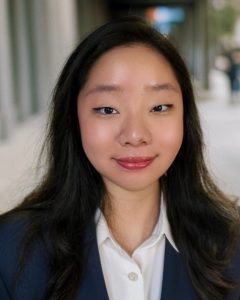
Her research is funded through the Mach-Gaensslen Foundation Fellowship in Mental Health, Addictions and Cognitive Health, awarded by the Canadian Institutes of Health Research (CIHR). She has completed the first of two years of research.
The fellowship was a good fit for Kim’s patient-oriented research, whereas other CIHR grants are focussed more on basic research. “This is another example of how the Mach-Gaensslen Foundation of Canada can make a difference,” says Dr. Christopher Carruthers, chair of the foundation’s board. “We can fund research that is critical and immediately applicable in the clinical setting but doesn’t fit existing categories for other research funding.”
Applying research results in patient care
Kim looks at studies with data sets consisting of patients with depression. Findings from the studies — about risk factors, the success of treatment approaches, and outcomes — can give physicians guidance on how best to help their patients.
“There are different predictors for different dilemmas and different patient groups,” says Kim. This is why the existing “rules of thumb” may not provide the best answers. “There is no one-size-fits-all,” says Kim.
To date, Kim has developed three decision trees for “hard-to-treat” or “complex” depression.
The first drew from a study of more than 1300 adults with major depressive disorder who didn’t see much improvement even after four weeks of treatment with an antidepressant medication. The decision tree answers questions such as, should the treatment continue longer? Should the dose be increased? Or should the patient switch to another antidepressant?
The research showed that a few clinical factors predicted the effectiveness of staying on an antidepressant, increasing the dose, or switching to a new drug. Among these were better or poorer physical health and post-traumatic stress disorder. Looking for such predictors can help clinicians make the best choice to help their patients.
Another tree helps decide the best approach for patients with major depressive disorder who also drink alcohol often (“at-risk” drinking). Drawn from a study that included more than 140 patients with both problems, it looks at which is best — care from a single physician or “collaborative care” with non-physicians providing additional care over the telephone.
The decision tree indicates which type of care is suited to which patients. The number of drinks the patient is taking per week emerged as a factor in the decision.
Her third decision tree involved patients who have depression late in life and are not responding to an antidepressant. Such patients are at risk of suicide or can lose their ability to function in daily life. Thus, the aim is to help them improve quickly, before depression takes a toll.
The data for this decision tree were from a study of 742 patients in whom different medication regimens were tried. It looks at such questions as, does adding one of two antidepressants studied to the first drug improve outcomes? Or does switching to another antidepressant work better?
How many drugs the patient had already tried proved to be a factor in deciding whether to add a drug to the patient’s regimen or switch to a new drug. The patient’s age and severity of depression (determined by a commonly used questionnaire) also had an effect on the decision to add a drug or switch.
Kim says decision trees are simple to use, easily deployable, and scalable. They can be incorporated into day-to-day practice to help clinicians make well-informed decisions. And, of course, they can help relieve depression for patients effectively and quickly.
The research agenda for next year
During the second year of her fellowship, Kim plans to develop more decision trees, this time for non-drug treatments. She will draw from a study of psychotherapy for depression during the period before and after childbirth, as well as studies of brain stimulation techniques, including repetitive transcranial magnetic stimulation (rTMS) and theta burst stimulation (TBS).
She also wants to incorporate “biomarkers” into decision trees. Biomarkers are a patient’s biological differences, such as a genetic difference or the way they metabolize drugs, usually determined by blood tests. The effect of biomarkers on responses to medications has been explored in previous research.
Once she has designed decision trees, Kim’s next step is to test how feasible and useful they will be in clinical practice. But that’s a story for her next research grant.
For more details about the research and decision trees, see Dr. Helena Kim’s presentation.
See All News